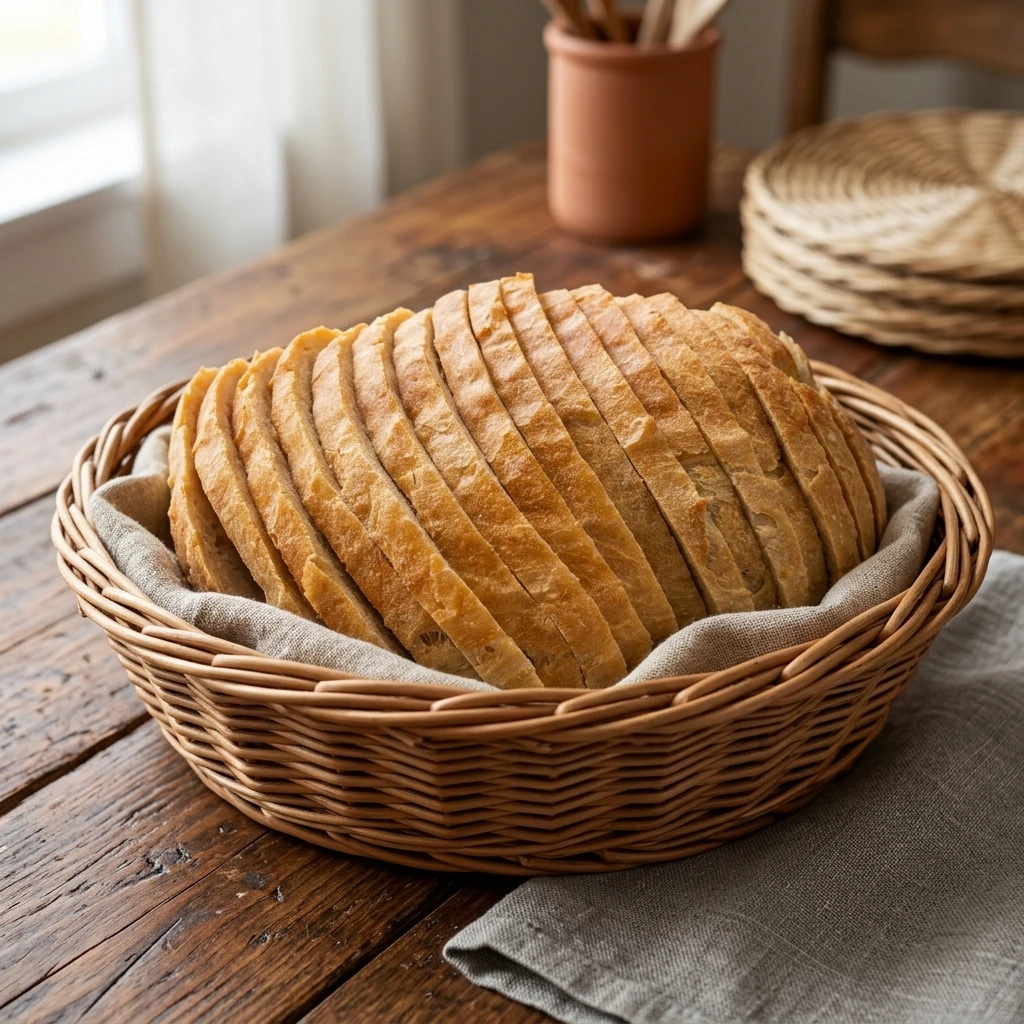
Tuscan Garlic Bread
The pandemic had undeniably transformed our approach to daily routines, particularly in the realm of cooking. With widespread lockdown and social distancing measures, the availability of premade meals dwindled significantly, leaving many to reconsider their reliance on takeout and restaurant dining. As grocery shelves emptied and dining out became a rare occasion, a sense of culinary adventure began to blossom among home cooks of all skill levels.
The desire for comfort and nourishment during these challenging times drove me to experiment in the kitchen. Bread-making, a task I had previously deemed daunting and time-consuming, became a newfound passion.
Tuscan garlic bread offered a compelling, flavorful alternative that echoed the rich tradition of Italian cuisine. The simplicity of its ingredients was cost-effective and ideal for someone navigating the uncertainties of the pandemic. The scent of freshly baked garlic bread wafting through my home not only filled my kitchen with warmth but also provided a sense of accomplishment.
The Step-by-Step Cooking Guide
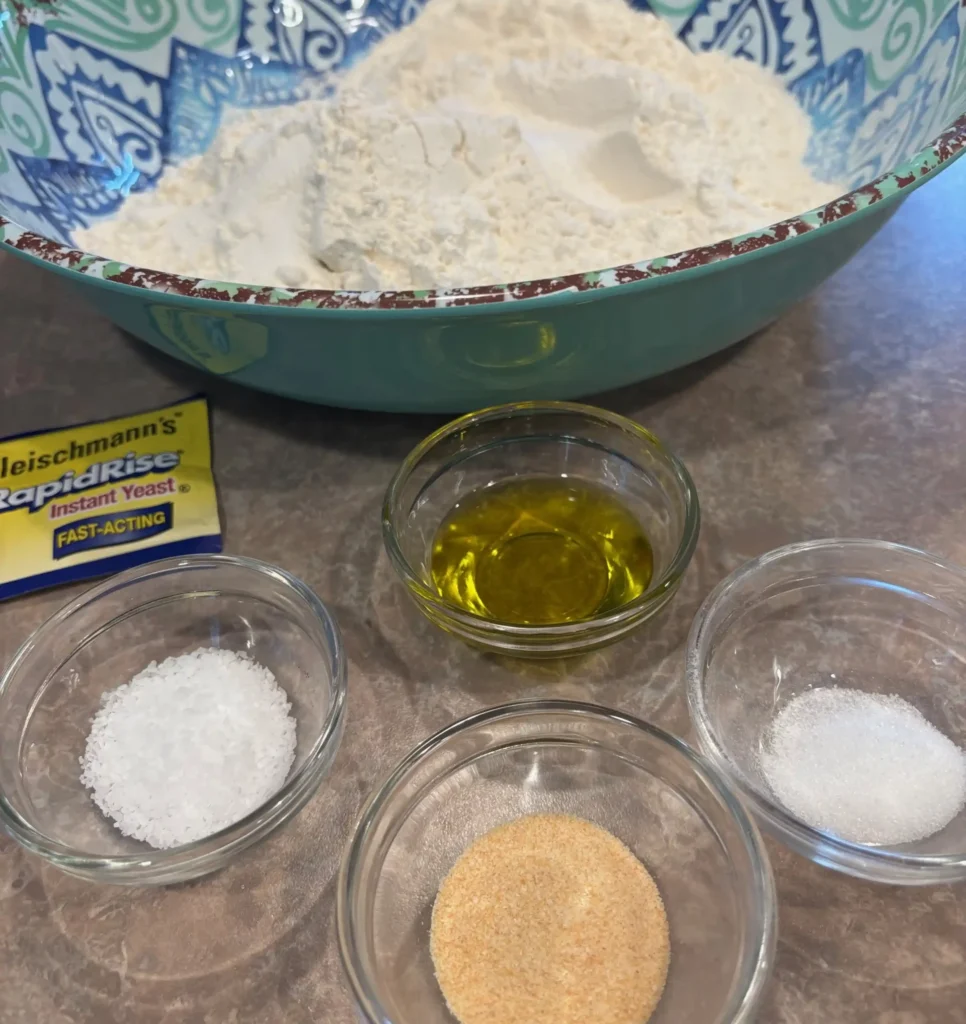
Every great loaf starts with a solid foundation. In a large mixing bowl, combine all-purpose flour and bread flour. Add kosher salt, garlic powder for that signature savory aroma, and a pack of yeast.
To keep this recipe completely sugar-free while still feeding the yeast and balancing the savory garlic, toss in monk fruit sweetener. Give everything a quick whisk to ensure the ingredients are evenly distributed.
Next, it is time to bring the dough together. Pour very warm water directly into the bowl to activate the yeast. Stir the mixture thoroughly, making sure the flour completely incorporates all the water.
To give this loaf its authentic Tuscan character, drizzle extra virgin olive oil over the top. Use your hands to thoroughly work the oil into the dough. Keep mixing until you have a cohesive, uniform dough with absolutely no dry flour pockets left at the bottom of the bowl.
To prepare the first fermentation, tear off a long piece of plastic wrap and lightly coat the center with a bit of olive oil. Cover your mixing bowl with the plastic wrap, ensuring the oiled side faces down towards the dough so it won’t stick as it expands. Let the dough proof undisturbed for 1.5 hours until it has significantly grown.
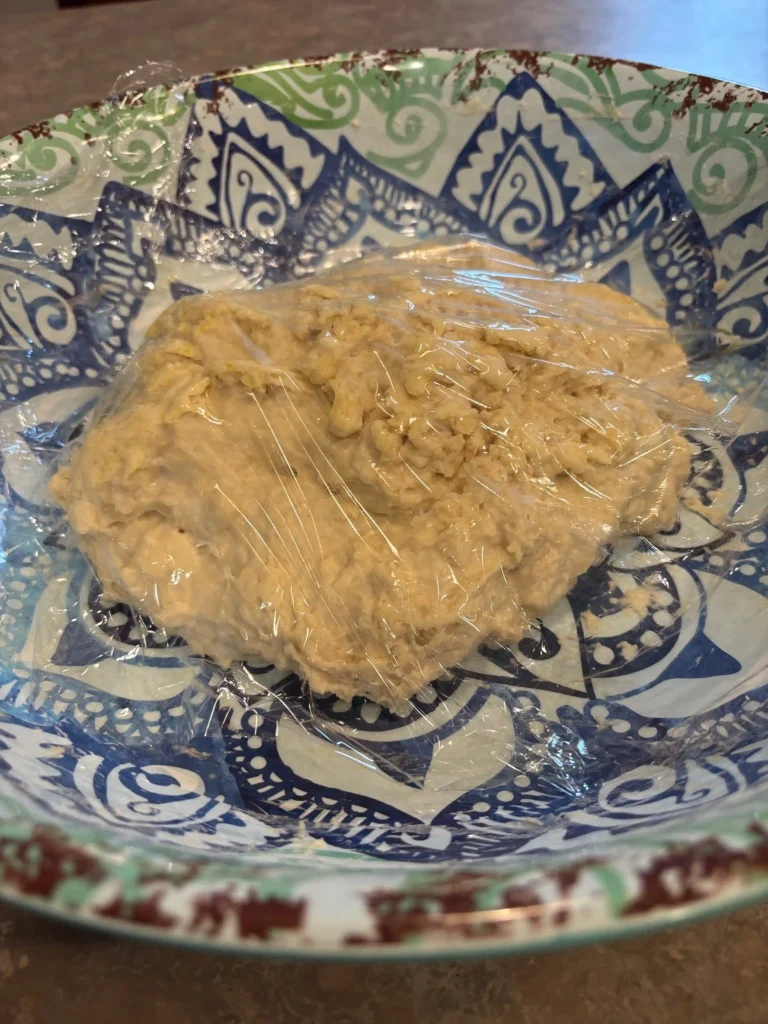
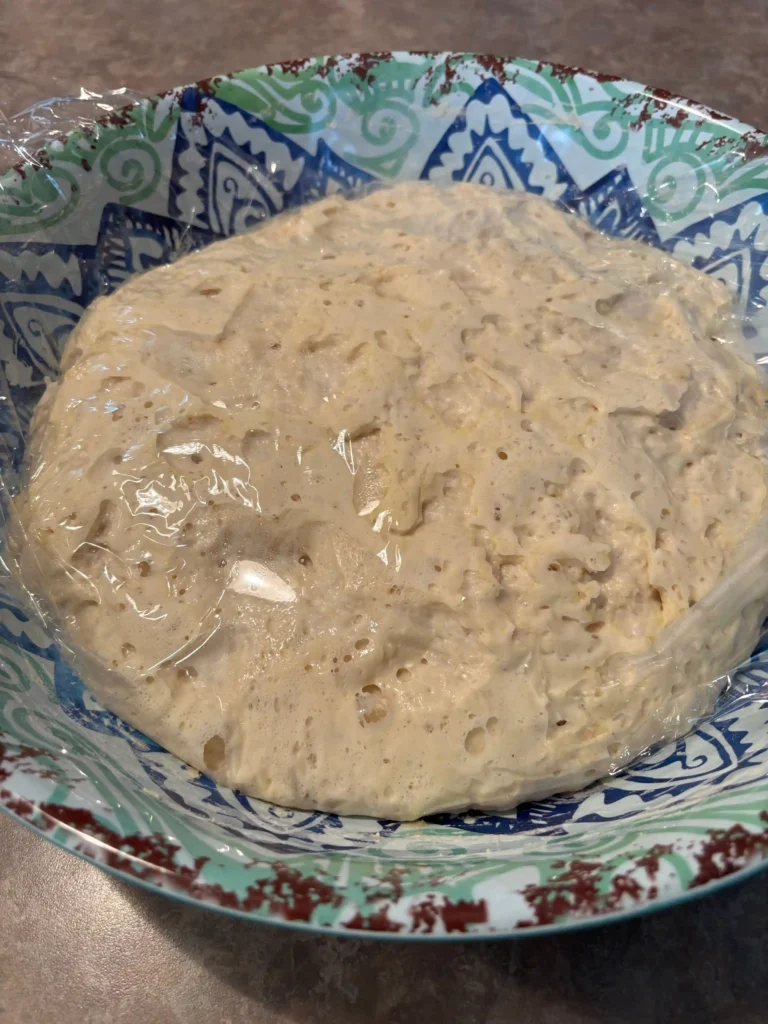
Instead of heavy kneading, this recipe uses a gentle folding technique to build the airy structure. Transfer the proofed dough onto a flat, well floured surface. Wet your hands with warm water to prevent sticking. Gently lift one side of the dough and fold it completely in half. Repeat this process 5 times, which helps trap air pockets inside and creates that beautiful, airy interior characteristic of rustic Italian bread.
Once the folding is complete, it is time for the final rest. Shape the dough slightly, and re-cover it using the same oiled clear plastic wrap from earlier. Let the bread rise on the flat surface for another 1.5 hours. This second fermentation deepens the garlic and olive oil flavors while giving the yeast one last chance to puff up the dough before it hits the heat.
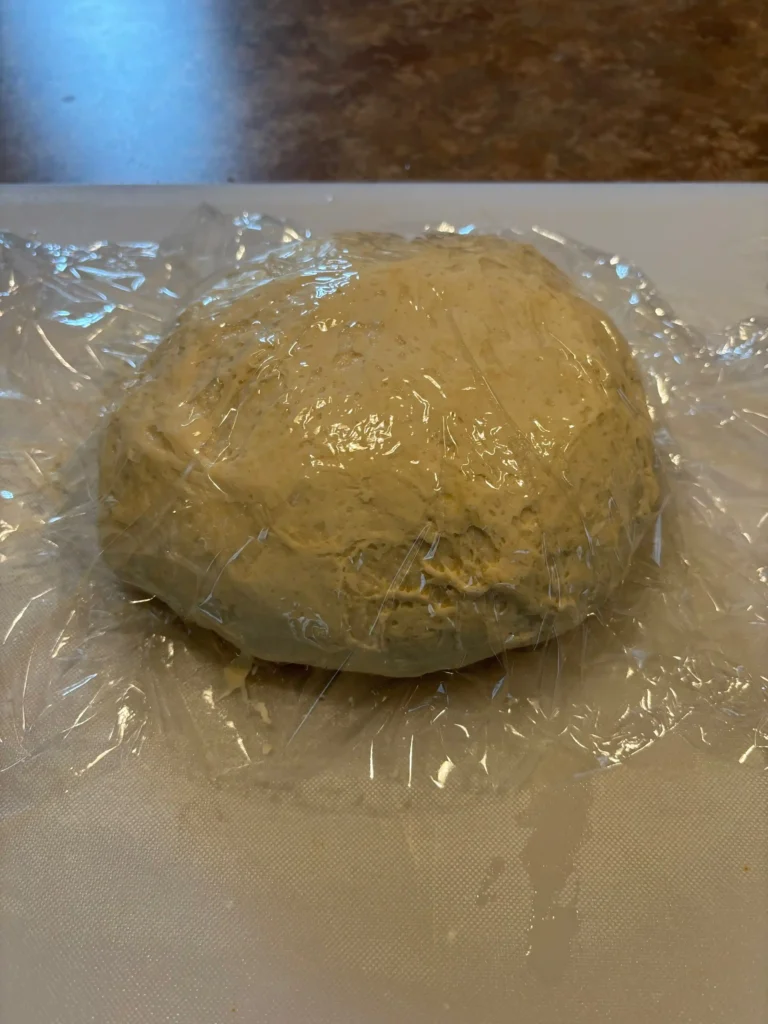
Timing is everything when it comes to a perfect crust. When you hit the final 30 minutes of your second rise, place a large Dutch oven into your oven and preheat. Heating the heavy pot ahead of time is crucial; it acts like a professional bread oven, trapping intense heat and steam the second the dough touches the surface.
When the final rise is complete, carefully remove the blistering hot Dutch oven from your oven and take off the lid. Gently transfer your dough inside the pot, replace the lid tightly to lock in the steam, return it to the oven. Bake covered for 30 minutes.
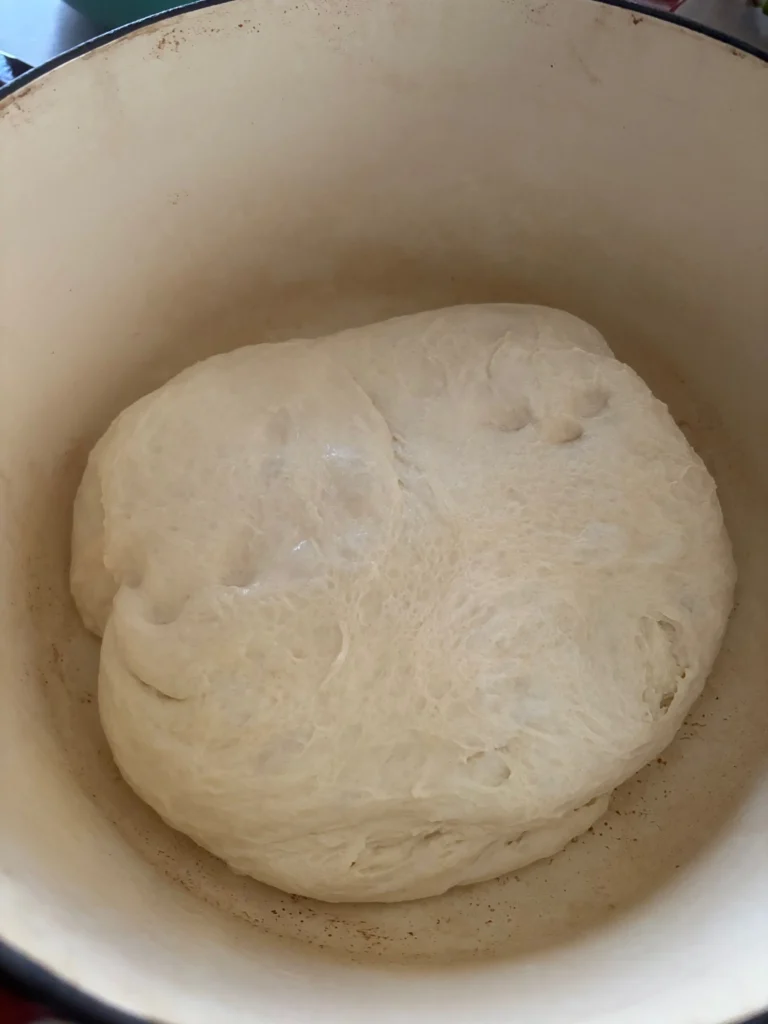
After 30 minutes, carefully remove the lid from your Dutch oven to let the trapped moisture escape, continue to bake for 2 more minutes to create deeply golden-brown Tuscan crust.
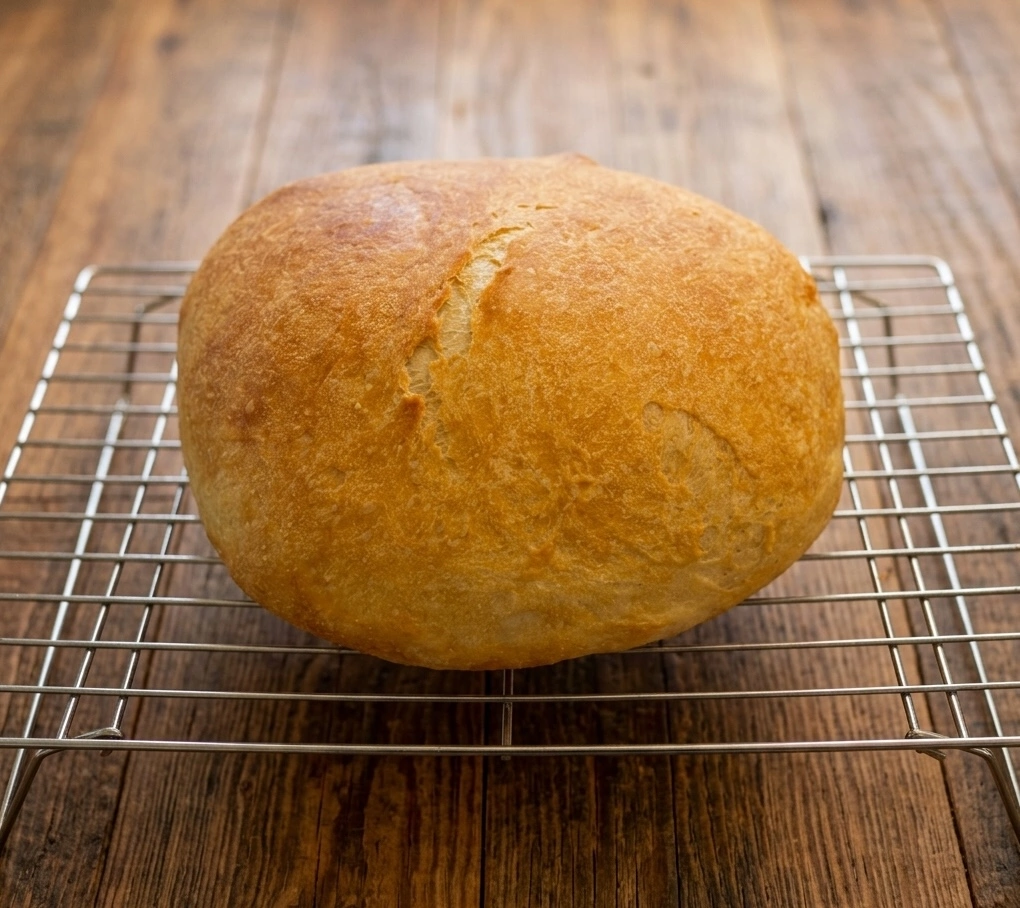
Once the bread is beautifully baked, lift it out of the Dutch oven and transfer it to a wire cooling rack. Once cooled, you can slice the bread.
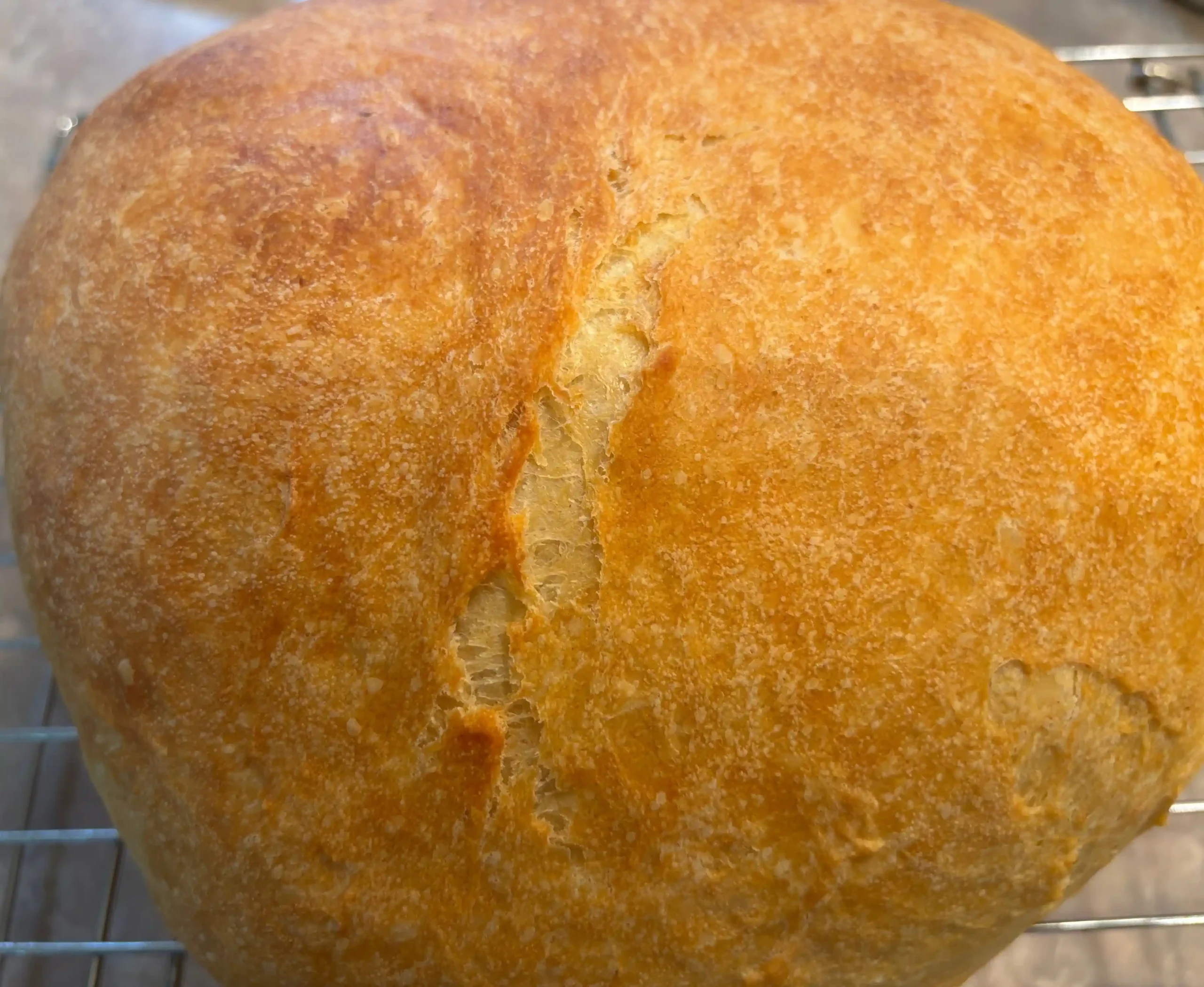
Tuscan Garlic Bread
Ingredients
Equipment
Method
- Combine 2 cups all-purpose flour, 2 cups bread flour, 2 teaspoons kosher salt, 2 teaspoons monk fruit sweetener, 2 teaspoons garlic powder and 1 package yeast in a large mixing bowl. Whisk to distribute evenly.2 cup all-purpose flour, 2 cup bread flour, 2 tsp kosher salt, 2 tsps monk fruit sweetener, 2 tsp garlic powder, 1 pkg yeast
- Pour in 2 cups very warm water (100-105℉) and stir until most of the flour is fully incorporated.2 cup very warm water
- Drizzle 2 tablespoons extra virgin olive oil over the dough. Wet your hands with warm water to prevent sticking and work the oil into the dough until fully combined.2 tbsp extra virgin olive oil + extra for coating
- Coat the center of a large plastic wrap with a little olive oil.
- Cover the dough with the plastic wrap, oil side down. Let the dough proof for 1.5 hours.
- Transfer the dough to a flat, floured surface. Wet your hands with warm water. Gently fold the bread in half a total of 5 times to build structure.
- Re-cover the dough with the oiled plastic wrap and let it rise again for another 1.5 hours.
- With 30 minutes left on the second rise, place a large Dutch oven (minimum 5 quarts) inside your oven. Preheat the oven to 450℉.
- Once the dough finishes rising, carefully remove the hot Dutch oven from the oven. Transfer the dough inside, cover with the lid, and return the pot back to the oven. Bake for 30 minutes.
- Remove the lid, and bake uncovered for another 2 minutes.
- Transfer the bread to a wire cooling rack. Let it cool completely before slicing. (see notes)